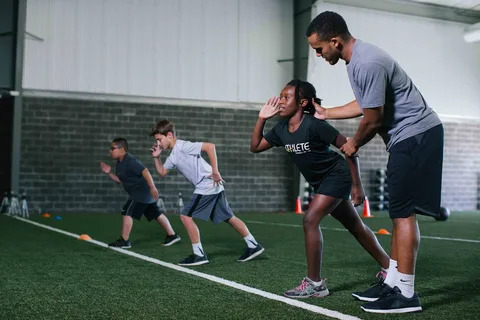
Most young athletes don’t wake up thinking about “the next level.” They think about today. About whether they’ll play well. About whether they’re improving or just going through the motions.
What changes everything is the moment they realize effort alone isn’t carrying them anymore. They’re trying hard, but progress feels inconsistent. That’s not failure — it’s the point where direction starts to matter.
Youth athletic training steps in here, not to push harder, but to make effort count.
Why Youth Athletic Training Changes the Relationship With Progress
In unstructured development, progress feels random. One week, things click. The next week, they don’t. That unpredictability quietly wears on confidence.
Youth athletic training gives athletes a different experience of growth. Improvements become traceable. Movement feels intentional. Strength feels earned rather than accidental. When athletes can connect what they do in training to how they feel in competition, belief starts to form. Not hype. Belief rooted in understanding.
That shift alone prepares athletes for higher levels more than most people realize.
How Athletes Learn to Move With Purpose Instead of Force
Young athletes often compensate before they understand. They push harder when something feels off. They speed up when control is missing.
Youth athletic training slows that instinct down. It teaches athletes how to use their bodies efficiently instead of aggressively. Running becomes smoother. Changes of direction feel less chaotic. Effort feels more sustainable.
This isn’t about limiting intensity — it’s about refining it. Athletes who move with purpose don’t burn energy fighting their own mechanics.
At higher levels, that efficiency becomes essential.
Sports Performance Training and the Ability to Handle “More”
Higher levels bring more of everything — speed, strength, expectation, responsibility.
Sports performance training prepares the athlete for this accumulation of stress through the gradual and consistent introduction of challenge. The athlete learns about how their body responds to the stress and recovers from it.
They stop guessing how much is “too much.” They begin to understand their capacity. That awareness protects both performance and confidence. Athletes who know their limits can push them intelligently.
Why Confidence Grows Quietly in the Right Training Environment
The strongest confidence doesn’t announce itself. It shows up as calm.
Youth athletic training creates that calm by removing uncertainty. Athletes know how to warm up. They know how to move. They know what preparation feels like.
When mistakes happen — and they always do — athletes don’t unravel. They adjust. They trust the work they’ve put in.
This emotional steadiness matters when competition becomes unforgiving.
Injury Prevention as a Form of Respect, Not Caution
Injury prevention isn’t about holding athletes back. Injury prevention is about respecting what these athletes want to accomplish.
Sports training at the youth level helps build a balanced strength of the body, preparing it for the repetitive task of training. One’s joints feel as if they are being supported. One’s movements feel as if they are stable. Recovery becomes part of the process, not an afterthought.
The confident athlete about his physical security and plays with commitment instead of hesitation. That freedom is often overlooked — but it’s powerful.
How Training Teaches Athletes to Take Ownership of Their Growth
Sportsmen have to, at some stage, be responsible for themselves.
Sports training for youth introduces responsibility in a gradual manner. The players come to realize that the preparation is not optional, yet not to the point that it is daunting. It is the little details that count. It is consistency.
They realize that progress is not just a matter of motivation. It depends on showing up with intention.
That mindset is what higher levels expect — and rarely teach.
When is the Right Time to Start Youth Athletic Training?
The right time is when effort starts feeling disconnected from results.
When athletes sense they have more in them but don’t know how to access it. When growth creates inconsistency instead of excitement.
Training at this stage provides clarity. It helps athletes navigate change instead of resisting it.
That clarity compounds over time.
Why Preparing for Higher Levels is About Readiness, Not Speed
Higher levels don’t reward rushed development. They reward readiness.
Youth athletic training builds readiness through patience, structure, and awareness. Athletes learn how to handle more without becoming overwhelmed by it.
They don’t arrive perfectly. They arrive prepared to keep improving.
That distinction matters.
The Final Thought: The Long-Term Value of Youth Athletic Training
What athletes gain from youth athletic training lasts longer than any season.
They gain trust in their bodies. Confidence in preparation. And an understanding that growth is something they can influence.
That knowledge changes how athletes approach challenges — in sport and beyond. It’s the kind of foundation that supports higher levels without rushing toward them.
At Untamed Sports Performance, training is treated as the difference between temporary success and sustainable advancement. That is the work Coach Antawan continues to focus on every day.
Train for What Comes Next
Build Athletes Who Don’t Fade
Real development prepares athletes for pressure before it arrives. Untamed Sports Performance designs training systems that respect growth, reinforce movement quality, and support long-term progression.
Email us at untamedsportsperformance@gmail.com or call us at +1 (612) 462-9459
Leave a Reply